Asteroid targets
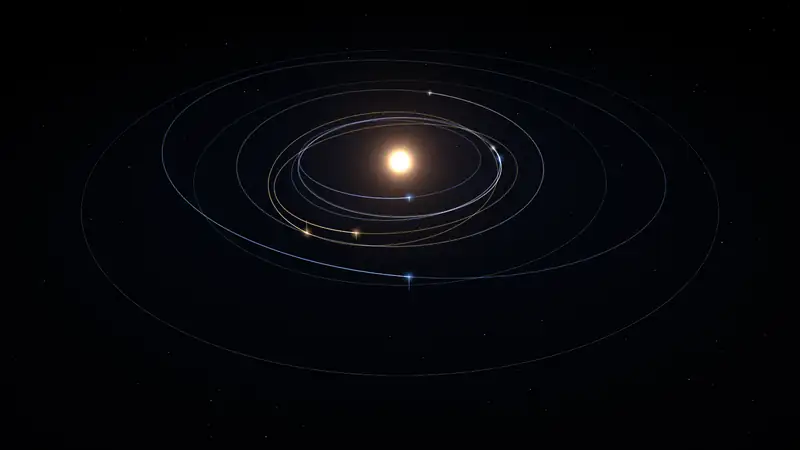 Where the asteroids areOpen the live view
Turn Bennu's shape in 3D, from NASA's OSIRIS-REx model. Turn Ryugu's shape in 3D, from JAXA's Hayabusa2 model. Turn Apophis's shape in 3D, from a preliminary radar model.
5 published missions in this dataset name a specific asteroid. This page shows what NASA's Jet Propulsion Laboratory lists for each one and how much speed change a round trip would need. It does not estimate what any asteroid is worth: such figures rest on assumed composition, metal prices and extraction costs. The furthest any asteroid mission here has reached on the evidence ladder is “Sampled” (material collected), by Hayabusa2 (Ryugu sample return) and OSIRIS-REx (Origins, Spectral Interpretation, Resource Identification, and Security-Regolith Explorer).
Asteroids named by mission records
5Values are NASA/JPL's, rounded as described under How to read this. Missions link to their records and sources.
| Asteroid | Missions | Size | Spectral class | Round trip from Earth (NHATS) | Orbit known from |
|---|---|---|---|---|---|
| 99942 Apophis (2004 MN4)Near-Earth (Aten group)JPL classes it as potentially hazardousJPL record | Karman+ Mission 1 (High Frontier, Corvus spacecraft)In developmentRecord’s target: Asteroid (99942) Apophis (operator's target since July 2026; the earlier High Frontier description named an uncharacterized near-Earth asteroid) | About 340 m acrossJPL value; source: Brozovic et al., Icarus 300, 115-128 (2018) | Sq (SMASSII class)Source: Binzel, R. P. et al. Icarus 200 (2009) 480-485 | 6.0 km/s354-day round trip, lowest-Δv option | 2004–2022 observationsJPL condition code 0 (0 best, 9 worst) |
| 101955 Bennu (1999 RQ36)Near-Earth (Apollo group)JPL classes it as potentially hazardousJPL record | OSIRIS-REx (Origins, Spectral Interpretation, Resource Identification, and Security-Regolith Explorer)Ended · Success | About 480 m acrossJPL value; source: Daly, M.G., et al., Sci. Adv. 6, eabd3649 (2020) | B (SMASSII class)Source: Clark, B.E., et al., Icarus 216, 462-475 (2011)Bulk density 1.194 g/cm³Source: Daly, M.G., et al., Sci. Adv. 6, eabd3649 (2020) | 7.0 km/s362-day round trip, lowest-Δv option | 1999–2020 observationsJPL condition code 0 (0 best, 9 worst) |
| 269 Justitia (A887 SA)Main beltJPL record | Emirates Mission to the Asteroid Belt (EMA) / MBR ExplorerIn developmentRecord’s target: Seven main-belt asteroids; a probe is to separate and descend to the seventh, 269 Justitia (landing year 2034 in the 2023 announcement) | About 51 km acrossJPL value; source: urn:nasa:pds:neowise_diameters_albedos::2.0[mainbelt] (http://adsabs.harvard.edu/abs/2014ApJ...791..121M) | Ld (SMASSII class)Source: EAR-A-5-DDR-TAXONOMY-V4.0 | Not near-Earth, so outside NHATS | 1942–2026 observationsJPL condition code 0 (0 best, 9 worst) |
| 162173 Ryugu (1999 JU3)Near-Earth (Apollo group)JPL classes it as potentially hazardousJPL record | Hayabusa2 (Ryugu sample return)Ended · Success | About 900 m acrossJPL value; source: Watanabe, S.; Hirabayashi, M.; Hirata, N.; Hirata, Na.; et al. (2019) Science 364, 267-272. | Cb (SMASSII class)Source: Sugita, S.; Honda, R.; Morota, T.; et al. (2019) Science 364, 6437.Bulk density 1.19 g/cm³Source: Watanabe, S.; Hirabayashi, M.; Hirata, N.; Hirata, Na.; et al. (2019) Science 364, 267-272. | 8.2 km/s370-day round trip, lowest-Δv option | 1986–2025 observationsJPL condition code 0 (0 best, 9 worst) |
| 2022 OB5Near-Earth (Apollo group)JPL record | OdinEnded · Failure | About 2.8–12 mEstimated from brightness by NASA NHATS; not measured | Not classified in JPL's database | 3.5 km/s362-day round trip, lowest-Δv option | 2022–2026 observationsJPL condition code 0 (0 best, 9 worst) |
Missions that name no single asteroid
1| Mission | Target as recorded | Why it has no row above |
|---|---|---|
| DeepSpace-2In development | Not selected; operator describes a near-Earth M-type (metallic) asteroid, and press reports about 28 candidates | The record says no target asteroid has been selected. |
The easiest known asteroids to reach (NASA NHATS)
7,165 near-Earth asteroids meet the round-trip limits of NASA's NHATS study: total Δv up to 12 km/s, a round trip of up to 450 days, at least 8 days at the asteroid and Earth departure in 2020–2045. These ten need the least speed change, ordered by NHATS's unrounded figure. Nine of the ten are estimated at 25 m across or less. NHATS lists nothing about what they are made of, and being easy to reach does not make an asteroid worth mining. 2022 OB5 is named as the target of Odin. Δv is explained under How to read this.
| Asteroid | Estimated size | Lowest Δv | Condition code | Named by a mission record |
|---|---|---|---|---|
| 2026 QQ8 | About 0.93–4.1 m | 3.3 km/s362-day round trip | 2 | — |
| 2021 GM1 | About 1.4–6.5 m | 3.4 km/s354-day round trip | 1 | — |
| 2023 FY3 | About 2.7–12 m | 3.4 km/s394-day round trip | 3 | — |
| 2022 RD2 | About 3.3–15 m | 3.5 km/s362-day round trip | 2 | — |
| 2022 OB5 | About 2.8–12 m | 3.5 km/s362-day round trip | 0 | Odin |
| 2000 SG344 | About 20–89 m | 3.5 km/s370-day round trip | 3 | — |
| 2020 CD3 | About 0.78–3.5 m | 3.6 km/s378-day round trip | 0 | — |
| 2021 LF6 | About 3.4–15 m | 3.6 km/s370-day round trip | 4 | — |
| 2024 PT5 | About 5.6–25 m | 3.6 km/s362-day round trip | 0 | — |
| 2022 NX1 | About 4.2–19 m | 3.6 km/s362-day round trip | 1 | — |
How to read this
Δv (delta-v) is the total change in speed a spacecraft must make, in kilometres per second. NHATS, NASA's Near-Earth Object Human Space Flight Accessible Targets Study, counts it from a 400 km circular Earth parking orbit, through matching the asteroid's motion and leaving it, to an Earth return no faster than 12 km/s at entry. It considers departures from 2020 to 2045, round trips of up to 450 days and stays of at least 8 days, using simple patched-conic trajectories without gravity assists or continuous thrust. NASA notes that the list is not a complete set of viable targets for an actual mission and that the figures change as orbits are refined (NHATS assumptions and caveats).
Condition code is JPL's measure of how well an asteroid's orbit is known, from 0 (well determined) to 9 (highly uncertain). A small asteroid with a high code may be hard to find again.
Spectral class groups asteroids by how they reflect light. It hints at what an asteroid is made of but does not measure it. JPL's database lists a class for few small asteroids.
Size. Where JPL lists a diameter it is shown, rounded to two figures. Otherwise NHATS gives a range estimated from the asteroid's brightness, because how much light its surface reflects is unknown.
Data: NASA/JPL Small-Body Database and the CNEOS NHATS table, retrieved 2026-11-03. This site rounds the values and orders the NHATS list; it computes nothing else. Mission records, not these figures, carry the reviewed research.